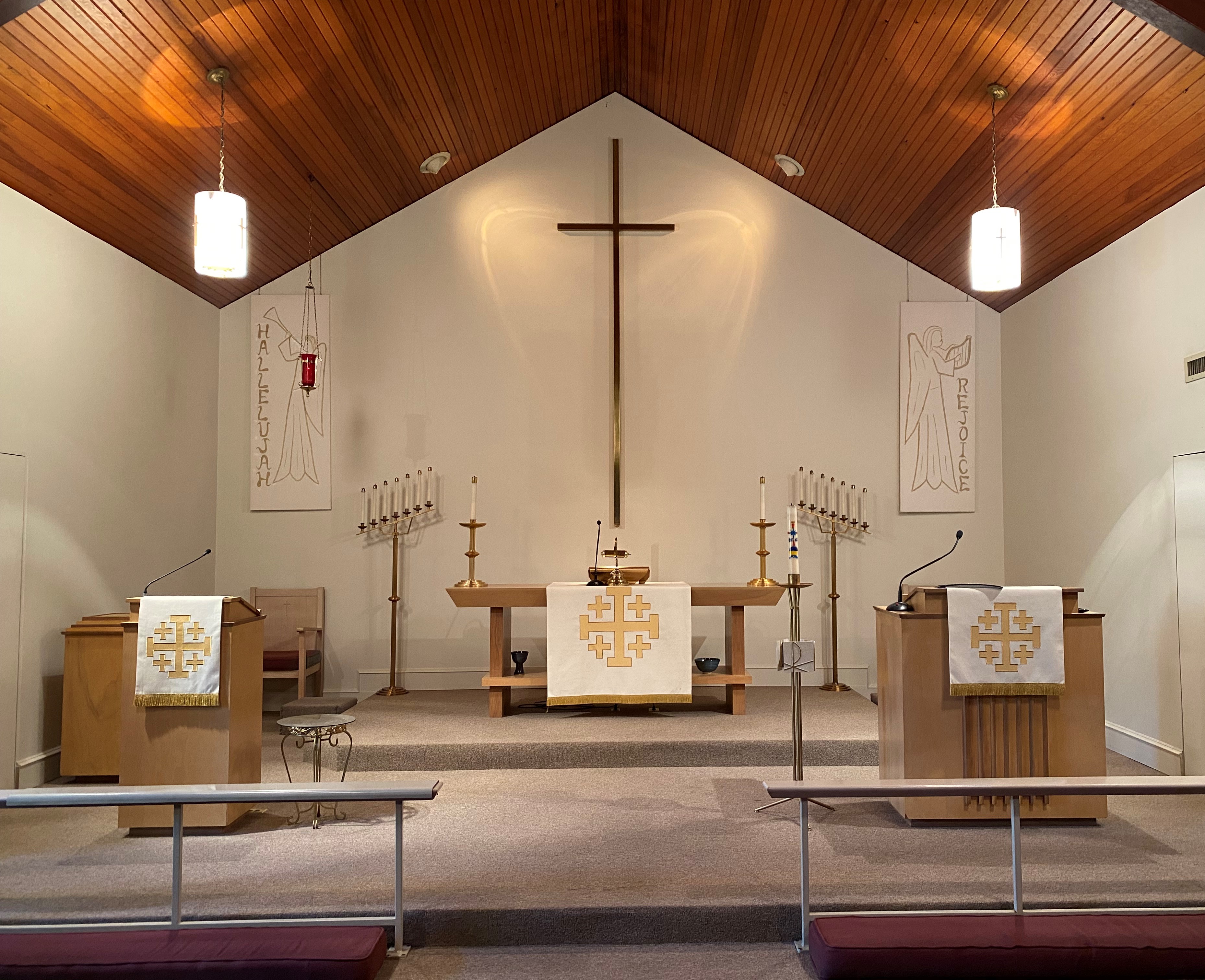
Holy Communion is celebrated at every Sunday morning Divine Service. The Sacrament of Holy Communion is the eating and drinking of the true Body and Blood of the Lord Jesus Christ, which were given and shed for the forgiveness of sins. This eating and drinking is a sacred act of worship instituted by Christ Himself for the great comfort of his people. It is a precious and integral part of the worship service. Even so, not all worshippers should expect to commune. Although no one who comes forward to the communion rail and desires the Body and Blood of the Lord will be denied communion, please read further. There is much more to communion than a person’s desire to receive it.
Proper instruction in the nature and purpose of this Sacrament, and a proper attitude in the one communing, is required for a healthful, blessed and worthy reception of Christ’s Body and Blood. Without that, Holy Communion can be harmful. Well-meaning Christians may come forward to commune but, perhaps through no fault of their own, may in fact be harmed in so doing–and we do not wish to cause them harm. Even more so, we do not wish inadvertently to invite or encourage non-Christians, who manifestly should not commune, to come forward. Though they may not realize it–how could they?–a non-Christian can only be harmed by communing!
Therefore, the Body and blood of the Lord Jesus are not offered to all who participate in worship, but only those the congregation has reason to believe may commune to their own blessing. This practice is called closed communion. Closed communion is not meant to be a judgment on the spiritual fitness of other Christians! (Although I suppose it is a judgment as to the spiritual fitness of non-Christians!) The fact is, though, the congregation cannot responsibly offer communion to individuals it does not know.
As a general rule, properly instructed (communicant) members of the congregation are invited to receive the Sacrament whenever it is offered. They are invited to come forward because the congregation knows them. They are its own members. In addition, members in good standing of other Missouri Synod congregations are invited to receive the sacrament as well, if they desire. Although we don’t necessarily know such individuals, we trust their own pastors and congregations do! However we do ask that, as a courtesy, nonmember Missouri Synod Lutherans let the pastor, an usher, or an elder know their intention to commune before they come forward to partake.
Other Christians present at worship should not expect to commune. Nevertheless, to almost every rule there are exceptions. Therefore non-Missouri Synod Christians who earnestly desire to commune should speak with the pastor beforehand about that desire. We do not wish to deny any Christian who wants Holy Communion a place at the table of the Lord.
Now, to be very practical, a nonmember who expects to attend worship with us only once or twice should not be troubled about trying to commune at First Lutheran at all. There just isn’t time to get to know one another, and it’s only one or two services!
On the other hand, a nonmember who expects to return with some regularity, and especially if they believe they might wish to become a member, perhaps should not commune on the very first visit, but should certainly seek out a conference with the pastor to discuss the possibility of communing going forward.
Having said all this, again I say, no one who comes forward to the communion rail and desires the Body and Blood of the Lord will be denied communion merely because they are not a member of this or another Missouri Synod congregation. We are trying to be responsible, and we trust that other Christians see the good in that, even if it means they don’t commune.
 First Lutheran Church (Missouri Synod)